Harmonica Real
sonOSMusic
4.9167.00 Reviews
- Version
- 2.1
- Installs
- 100.00K
- Age Rating
- Everyone
Screenshots
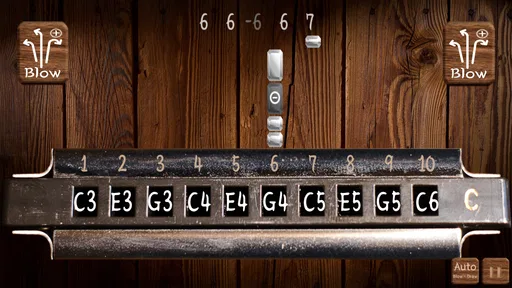
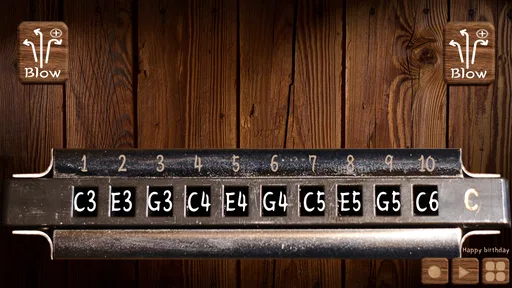
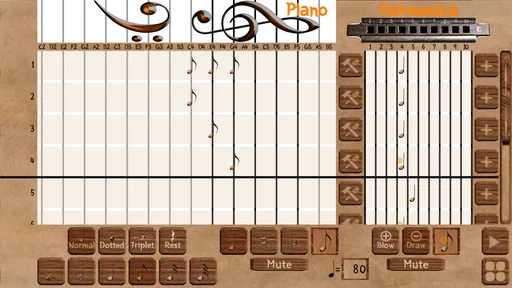
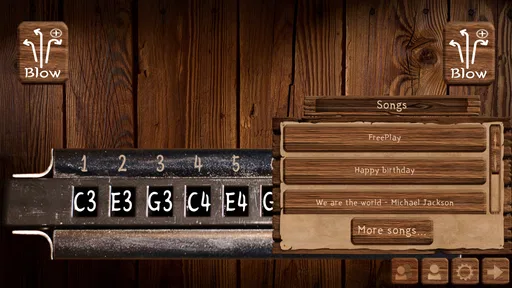
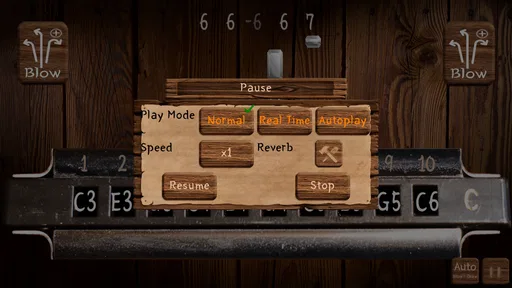
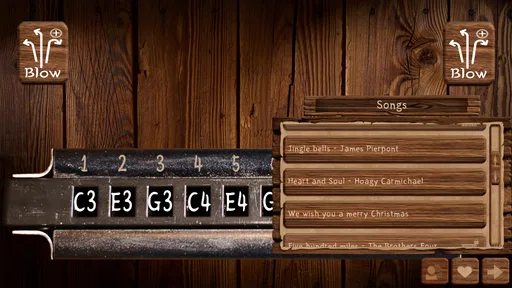
Our Review of Harmonica Real
 Analysis by Appyee
I approached Harmonica Real as a small music game rather than as a complete instrument simulator. That distinction matters. Its purpose is straightforward: put a harmonica-style playing experience on an Android device and let me make music without carrying a physical instrument. The idea is appealing for quick practice, casual experimentation, or simply trying a familiar folk and blues sound with my phone.
After spending time with it, I found the main attraction to be its focus. It does not try to become a broad music studio or a rhythm game packed with unrelated systems. The developer, sonOS, has built this around the harmonica itself, and the store summary points to a realistic harmonica timbre as the central experience. That narrow goal gives the game a clear identity, although it also means the right audience is fairly specific.
What the mobile harmonica experience feels like
The first thing I noticed is that this is best understood as a touch-based instrument toy with game-like accessibility. I can open it when I have a spare moment, explore the sound, and play short phrases without needing lessons, equipment, or a quiet setup for a full instrument. That makes it easy to recommend to someone who is curious about harmonica but is not ready to buy one.
The sound is the important part. A harmonica app lives or dies by whether its tone feels convincing enough to encourage playing. Here, the emphasis on a real harmonica timbre gives the experience more character than a generic keyboard sound would. It is not just tapping abstract notes; the appeal comes from hearing an instrument associated with blues, country, folk, and casual sing-alongs.
I would not mistake that focus for a replacement for a physical harmonica. A phone screen cannot reproduce every part of the instrument’s physical response, and touch controls naturally change how notes are started and shaped. Still, for a quick musical sketch, the format is convenient. I can test a melody, find a mood, or accompany a simple idea without setting up anything else.
The game is free, which makes the decision to try it uncomplicated. It is also rated for Everyone, so it is suitable as a family-friendly music experiment rather than an app aimed only at experienced players. Its current version is 2.1, and the minimum operating-system requirement is Android 7.1, keeping it accessible to many older devices as well as newer phones.
Who will get the most from it
I think the strongest audience is made up of beginners, casual musicians, and people who already enjoy harmonica sounds but do not always have an instrument nearby. It can also work for a child who wants to explore pitch and rhythm through a recognizable instrument, provided an adult sets reasonable expectations about what a phone game can teach.
It is particularly useful for short sessions. For example, I can imagine waiting for a friend, opening the app, and trying to reproduce the hook of a song I heard earlier. I may not produce a polished performance, but the exercise turns idle time into a small musical challenge. That is a more realistic use case than expecting the app to replace structured practice.
Someone who already plays harmonica may enjoy it as a sketchpad. I can use the mobile version to remember a melodic idea, test the contour of a phrase, or decide whether a harmonica-like color suits a song arrangement. The phone is always more convenient than carrying an instrument, even if the result is less expressive.
On the other hand, I would skip it if my main goal were formal technique. A serious learner needs feedback on breath control, articulation, bending, posture, timing, and tone production. A touch screen cannot provide the same physical training. For that purpose, a real harmonica, a structured lesson, or a dedicated practice tool would be a better choice.
How it compares with ordinary alternatives
The usual alternatives fall into three groups: a physical harmonica, a general virtual-piano app, or a full music-making application. Each one serves a different need. A physical harmonica offers the most authentic interaction, but it costs money, takes practice, and is not always convenient in public. A piano app may offer more notes and familiar controls, but it does not deliver the same harmonica character.
A full music workstation can record, layer, and edit ideas in much greater depth. That makes it preferable for composition rather than casual playing. Harmonica Real is more immediate. I can reach the central sound without navigating a large collection of instruments or production panels. The trade-off is that the focused experience may feel limited once I want arrangement, recording, or detailed editing.
That comparison helped me understand the app’s value. It is not competing with every music app at once. Its advantage is the combination of a specific instrument identity, free access, and low commitment. Its weakness is equally clear: the narrower the goal, the sooner an ambitious musician may outgrow it.
Where progress comes from, and where pressure does not
Because this is a music game rather than a conventional level-based adventure, progress is mostly personal. I improve by becoming more comfortable with the touch layout and by learning how to turn individual notes into recognizable phrases. The satisfaction comes from making something sound intentional, not from collecting equipment or climbing a visible competitive ladder.
That is a healthy design direction for a casual instrument app. I do not feel pushed to spend simply to keep up with other players, and the free entry point removes the most obvious barrier. I can try the experience on its own terms and decide whether the sound and controls are worth returning to.
There is also a useful psychological benefit in treating each session as a small experiment. Instead of waiting until I have time for a full practice routine, I can set myself a tiny target: reproduce a two-note movement, keep a steady pulse, or invent a short answer to a sung phrase. These small tasks make the app more engaging than random tapping.
The limitation is that self-directed progress can become vague. Without a clear learning path, a beginner may enjoy the sound but not know what to practice next. I found it helps to bring my own structure: choose one melody, play it slowly, then repeat it with a different rhythm. That turns the app from a novelty into a modest practice companion.
There is no reason to assume that free access means unlimited depth, and I would not judge the game by the standards of a paid professional instrument. The fair question is whether it provides enough immediate musical value without demanding a purchase. For casual use, I think it does. For a complete curriculum or serious production workflow, I would look elsewhere.
Fairness, spending, and what I can judge
The verified purchase context is simple: the game is free to download. That is meaningful because I can evaluate its core appeal before deciding whether it deserves space on my phone. I do not need to budget for an instrument at the outset, and a curious user can test the concept without turning the first interaction into a financial commitment.
I am careful not to promise more about spending than the available product facts support. The free price tells me the entry point is free, but it does not by itself explain every possible purchase or monetization detail. I would therefore make any decision about optional spending only after checking the current in-app screens myself. That is the fairest approach for the reader and for the developer.
From a competitive-fairness perspective, the app does not present itself as a contest where a player must buy advantages to compete. Its appeal is individual performance and sound exploration. That makes the experience less stressful than games built around rankings, timed events, or equipment upgrades. I can play for enjoyment rather than worrying about falling behind.
Still, fairness is not only about money. It also involves whether the controls give a beginner a reasonable chance to make music. A touch instrument should respond predictably, avoid unnecessary complexity, and let the player hear a relationship between action and result. The harmonica focus helps here because I know what kind of sound I am trying to produce, even when my fingers are not especially precise.
My practical advice is to treat the free version as a low-risk trial, not as a promise of a complete harmonica course. If the tone encourages you to play and the controls feel comfortable on your phone, it has earned a place as a casual tool. If you need recording, detailed lessons, or physical technique, save your money for hardware or software designed for that specific purpose instead.
Three ways to make short sessions more useful
My first tip is to use the app for melodic memory rather than aimless improvisation. After hearing a tune, reduce it to a very short phrase and try to find it by ear. This is more valuable than tapping every available note because it trains attention and gives each session a clear endpoint. Even a rough reproduction can show whether I remembered the melody correctly.
My second tip is to separate pitch practice from rhythm practice. I can first find the notes slowly, then repeat the same sequence with a steady beat created by tapping my foot or counting quietly. This avoids the common problem of celebrating a correct melody that has no consistent timing. The app supplies the harmonica color; I supply the discipline.
My third tip is to use it before touching a physical instrument. When I have an arrangement idea, I can sketch the melodic shape on the phone first. If it sounds promising, I can later transfer the idea to a real harmonica or another instrument. This workflow is not about perfect reproduction. It is about deciding quickly whether an idea has enough character to develop.
A fourth useful approach is to play in a quiet environment and listen through the phone’s normal output before reaching for headphones or external equipment. That gives me a more realistic sense of whether the sound is pleasant in an everyday setting. If I am using the app as a family activity, I can also keep sessions short and let different players invent responses to the same phrase.
These methods reveal a trade-off that is easy to miss. The app’s simplicity can make it approachable, but it also places more responsibility on me to create goals. The less structure the game provides, the more helpful a small personal exercise becomes. That is not a flaw for everyone, but beginners expecting a guided teacher may find it frustrating.
Questions I would ask before installing
One natural question is whether a beginner can use it without knowing harmonica technique. I believe so, because the basic attraction is immediate sound exploration rather than specialist knowledge. However, being able to make a sound is not the same as learning to play the physical instrument. I would use it as an introduction and listening exercise, then move to a real harmonica if serious interest develops.
Another question is whether it suits children. The Everyone rating makes it appropriate from a content perspective, and the recognizable instrument can be engaging. I would still treat it as supervised creative play for younger users, especially if the phone is shared or if the child tends to tap randomly. A simple challenge, such as copying a parent’s short phrase, gives the experience more value.
Users may also wonder whether it is worth installing on an older Android phone. Since the minimum operating system is Android 7.1, the compatibility range is broad enough for many older devices. Performance and screen comfort can still vary by handset, so I would judge the experience on the actual phone rather than assume every display will feel equally natural.
People who want to perform for others should keep expectations realistic. The app can help create a quick musical moment, but a phone-based harmonica is not automatically equivalent to a stage instrument. For a polished performance, a physical harmonica or a more specialized setup will normally offer greater control and presence.
Finally, I would ask whether the strong user response means it is suitable for everyone. The game has an average rating of 4.9 from around 2.2 thousand ratings, with over 100 thousand installs and 167 written reviews. Those figures show that many users respond positively, but they do not remove the personal question of control style. Someone who dislikes virtual instruments may still prefer a real object, regardless of the rating.
My trust verdict on the experience
I came away viewing Harmonica Real as a focused, honest kind of music game. Its strength is not a huge feature list; it is the decision to center the experience on a harmonica-like sound and make that idea easy to try. The free price, Everyone content rating, and modest system requirement make the first step comfortable for casual users.
I also appreciate that its limitations are easy to understand. It does not replace breath technique, a physical instrument, a recording studio, or a structured teacher. If I expect those things, I will be disappointed. If I want a portable way to explore melodies and enjoy the character of a harmonica, the app makes much more sense.
The developer sonOS has reached a useful balance between accessibility and musical personality. I would recommend it to a friend who wants a quick instrument experiment, a beginner looking for a gentle starting point, or a musician who needs a pocket sketchpad for melodic ideas. I would not recommend it as the only tool for someone committed to mastering harmonica performance.
My final advice is to install it with one clear purpose: play a few phrases, test whether the timbre inspires you, and decide whether the touch interaction feels natural. If it does, keep using short, intentional exercises instead of waiting for a formal progression system to tell you what to do. The best reason to keep this game is the small musical habit it can make possible—a few minutes of listening, trying, and creating whenever a full instrument is out of reach.
For me, that is enough to make it worthwhile. It is not a complete substitute for harmonica playing, but it is a friendly and low-pressure doorway into the sound. Readers who want a free, focused music game should give it a chance; readers seeking deep lessons or professional control should choose a more specialized alternative.
Verdict
Strengths of Harmonica Real
- Responsive touch controls make notes easy to play.
- Includes several harmonica sounds for different musical styles.
- Useful for practicing scales, melodies, and basic techniques.
- Simple interface is easy for beginners to understand.
- Works well for quick practice sessions anywhere.
Limitations of Harmonica Real
- Sound quality depends heavily on your device’s speakers or headphones.
- Virtual controls may feel limited for advanced harmonica players.
- Some features may require in-app purchases or contain ads.
- Playing accurately can be difficult on smaller phone screens.
- It does not fully reproduce the feel of a physical harmonica.
Similar Picks in This Category
View All
Tiles Hop Music & Ball Game
AMANOTES PTE. LTD.4.3

Magic Tiles 3™ - Piano Game
AMANOTES PTE. LTD.4.6

Real Piano
Bilkon3.7

Piano Game: Classic Music Song
Dream Tiles Piano Game Studio4.0

Smash Colors: Music Ball Rush
BADSNOWBALL HONGKONG LIMITED4.2

Piano Music Go-EDM Piano Games
Joy Journey Music Games4.5
Frequently Asked Questions
What is Harmonica Real, and what can I do with it?
Harmonica Real is a virtual harmonica app designed to let you play melodies directly on an Android or iOS device. After opening the app, you can interact with an on-screen harmonica by tapping or sliding across its notes. It is suitable for casual experimentation, practicing simple tunes, learning note positions, or entertaining friends, although it cannot fully replace the sound, response, and technique of a physical harmonica.
Is Harmonica Real suitable for beginners who have never played harmonica?
Yes, Harmonica Real can be a useful starting point for beginners because it presents the instrument in a simple, accessible format without requiring an actual harmonica. You can explore note locations and practice basic melodies at your own pace. However, users should remember that virtual controls may not accurately reproduce important techniques such as breath control, bending, vibrato, and the physical feel of playing a real instrument.
Does Harmonica Real work offline after it has been installed?
The core playing experience generally appears designed for use without a continuous internet connection, which makes Harmonica Real convenient for quick practice or casual play while traveling. Nevertheless, some versions may display advertisements, request online services, or include features that depend on connectivity. It is worth opening the app once while online and reviewing its store listing and permissions before relying on it offline.
Does Harmonica Real contain advertisements or in-app purchases?
Availability of advertisements, premium options, and in-app purchases can vary depending on the platform and the version distributed by the developer. Many free virtual instrument apps use advertising to support development, and some may offer paid upgrades or additional sounds. Before downloading, check the current Google Play or App Store listing for pricing, subscription details, and the exact purchase terms available in your region.
What permissions and device requirements should I check before downloading Harmonica Real?
Harmonica Real should run on many modern smartphones and tablets, but compatibility depends on the operating system version, screen size, and the developer’s latest requirements. Review the app-store compatibility information before installing. Also examine requested permissions carefully; a simple virtual instrument normally should not need extensive access to personal data. Avoid granting permissions that seem unrelated to playing the harmonica unless the app clearly explains their purpose.
Play our best games!


